Winter outfit guide — At Outfit Aura, we believe your winter wardrobe should be a source of confidence and comfort. The secret to mastering the colder months lies not in a single miracle garment, but in the art of strategic layering. A well-executed cold-weather outfit is your armor against the elements, a testament to your fashion sensibility, and the key to enjoying everything the season has to offer.
At Outfit Aura, we believe that your winter wardrobe should be a source of confidence and comfort. This ultimate guide is designed to be your go-to resource, walking you through every component of a perfect winter look. We will delve into the science of layering, explore essential pieces for your closet, and provide you with stylish outfit formulas for every occasion. Prepare to transform how you dress for the cold and discover that true style shines brightest when the temperature drops.

The Unbeatable Foundation: Mastering the Art of winter outfit guide
Layering is the cornerstone of any effective cold-weather outfit. It’s not just about piling on clothes; it’s a strategic system that traps body heat, manages moisture, and provides unparalleled versatility. By understanding the three core layers, you can adapt to any indoor or outdoor environment with ease. winter outfit guide
The Base Layer: Your Second Skin
Think of your base layer as your personal climate control system. This is the layer that sits directly against your skin, and its primary job is to wick moisture (sweat) away from your body to keep you dry and comfortable. A damp base layer from perspiration can quickly lead to a dangerous chill. winter outfit guide
- What to Look For: Opt for materials like merino wool, silk, or synthetic fabrics like polyester or nylon. Avoid cotton at all costs for this layer, as it absorbs moisture and holds it against your skin.
- Our Top Picks: A lightweight merino wool crewneck or a fitted thermal long-sleeve top is a versatile starting point. For your lower half, consider thermal leggings or long johns that can be worn discreetly under your pants. winter outfit guide
The Mid winter outfit guide: The Insulation Engine
This is the layer that provides the primary insulation, trapping the warmth generated by your body. The mid layer is all about creating dead air space that your body heat can warm up. This is where you can have the most fun with texture and weight.
- What to Look For: This category includes pieces like fleece jackets, thin wool sweaters, cashmere cardigans, vests, and lightweight down puffers. The thickness of this layer should be adjusted based on the severity of the cold.
- Our Top Picks: A classic cable-knit sweater offers timeless style and warmth. A sleek fleece or a sophisticated cashmere blend sweater provides exceptional warmth without bulk, making it perfect for transitioning from a chilly commute to a climate-controlled office. Explore our collection of elegant sweaters at Outfit Aura for inspiration.
The Outer Layer: Your Protective Shield
Also known as the shell, the outer layer is your first line of defense against wind, rain, and snow. Its purpose is to shield the insulating layers beneath from the elements, allowing them to do their job effectively. A proper outer layer is windproof and water-resistant or waterproof.
- What to Look For: A well-insulated parka, a technical ski jacket, a stylish wool coat, or a trench coat designed for winter. Consider features like a durable water-repellent (DWR) finish, a adjustable hood, and sealed seams for maximum protection.
- Our Top Picks: A long, insulated parka is a winter staple for extreme cold, while a structured wool pea coat offers a more formal and classic silhouette. Discover the perfect outer layer to define your winter look in our curated edit of statement coats.
Building Your Cold Weather Arsenal: Essential Pieces for Every Wardrobe
Now that the layering theory is clear, let’s talk about the specific, must-have items that will form the backbone of your winter wardrobe. Investing in quality versions of these pieces will ensure you are prepared for anything.
The Indispensable winter outfit guide Coat
Your winter coat is the centerpiece of your cold-weather style. It’s the garment people see most, so it should be both highly functional and reflective of your personal aesthetic.
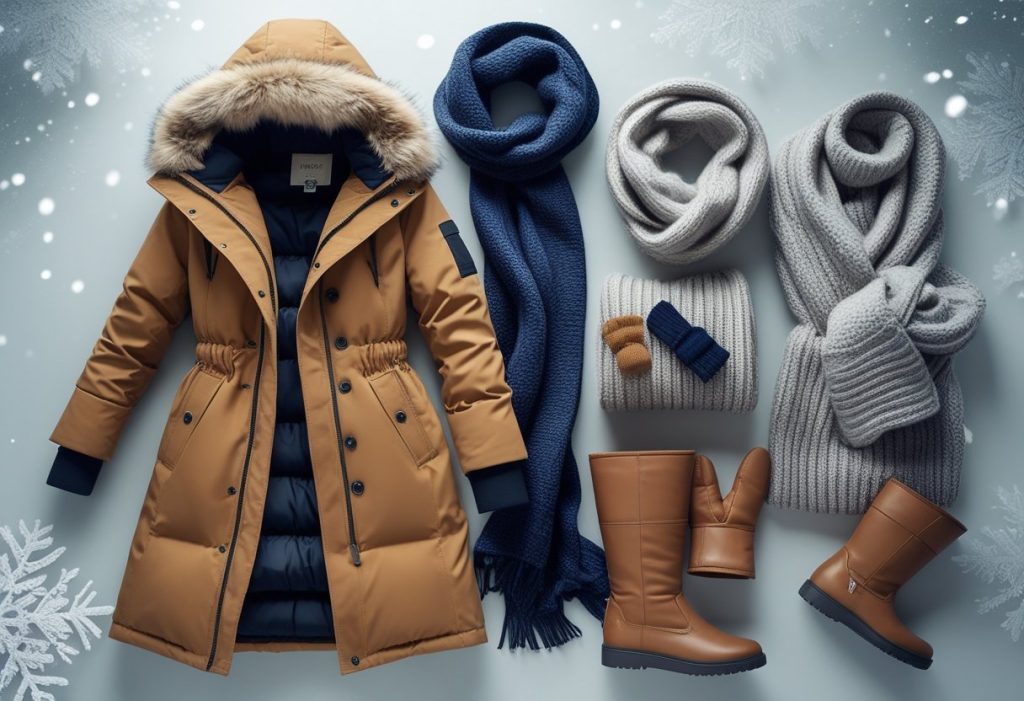
- The Parka: The ultimate workhorse for sub-zero temperatures. Look for one with down or synthetic insulation, a faux-fur trimmed hood, and plenty of pockets.
- The Wool Coat: A timeless trench or pea coat in a neutral color like camel, black, or navy is incredibly versatile, easily dressing up for work or a dinner date.
- The Puffer Jacket: No longer just for the slopes, puffers have become a fashion staple. Choose from cropped versions for a trendy look or longline designs for maximum warmth. winter outfit guide
Sweaters: The Heart of Coziness
A collection of high-quality sweaters is non-negotiable. They serve as the perfect mid-layer and can often be the star of your outfit when indoors. winter outfit guide
- The Chunky Knit: Perfect for a weekend brunch or a casual day out, a chunky knit sweater provides immense warmth and a touch of rustic charm.
- The Fine-Gauge Knit: A thinner, more refined sweater, often in merino wool or cashmere, is ideal for layering under blazers or wearing to the office. It’s the epitome of quiet luxury.
- The Turtleneck: A sleek turtleneck is not only incredibly warm (protecting your neck), but it also creates a sleek, streamlined silhouette that is both sophisticated and practical. winter outfit guide
The Unsung Heroes: Bottoms and Footwear
Don’t let your top half do all the work. Your legs and feet are critical to your overall warmth and comfort.
- Bottoms: Swap out thin denim for corduroy pants, heavyweight denim, or wool trousers. For brutally cold days, fleece-lined leggings or tights worn under skirts or dresses are a game-changer.
- Footwear: Style and practicality must merge. Waterproof leather boots with a sturdy grip, classic ankle boots with a warm lining, and functional snow boots are all essential. Always consider the sole—a thick, lugged sole provides better insulation from the cold ground and improved traction on ice. winter outfit guide
Style Meets Substance: Curated Outfit Formulas for Every Occasion
Let’s put these pieces together! Here are some foolproof outfit ideas to keep you looking and feeling fabulous all winter long. winter outfit guide
The Urban Explorer
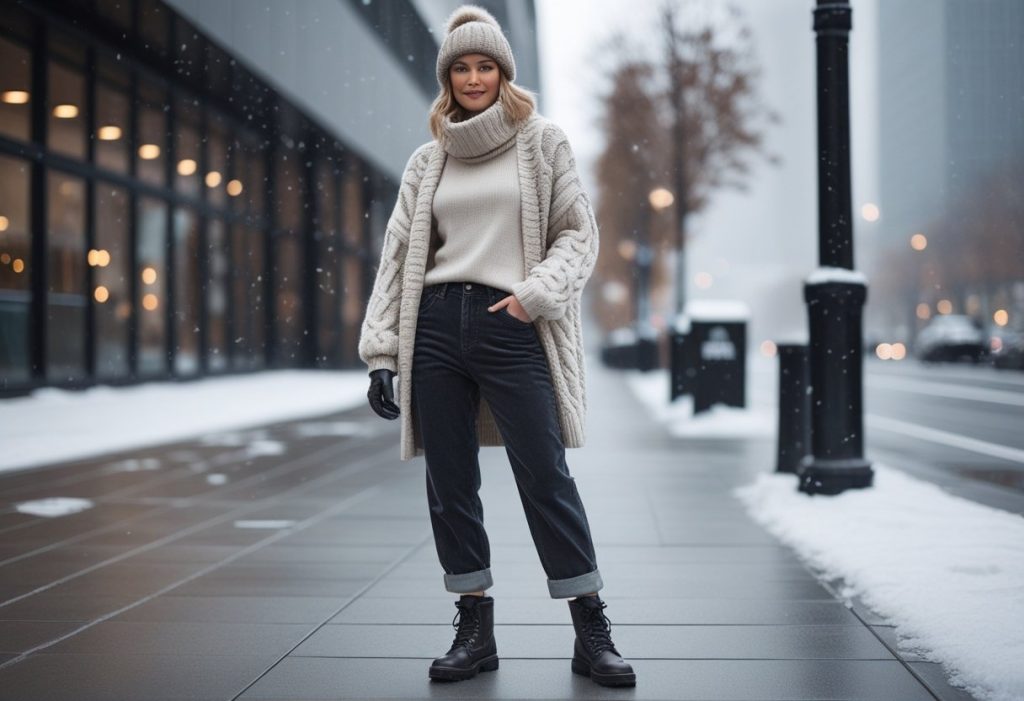
This outfit is for navigating the city in style, from running errands to meeting friends for coffee. winter outfit guide
- Base Layer winter outfit guide: A fitted merino wool turtleneck.
- Mid Layer winter outfit guide: A chunky, oversized cable-knit cardigan.
- Bottoms winter outfit guide: Dark wash, heavyweight jeans or comfortable corduroy pants.
- Outer Layer winter outfit guide: A sleek, longline puffer jacket in a neutral color.
- Footwear winter outfit guide: Durable, waterproof combat boots or stylish leather ankle boots.
- Accessories winter outfit guide: A large woven beanie, a chunky knit scarf, and leather gloves.
The Office Ready Professional
Stay polished and professional without freezing on your commute or in a chilly office.
- Base Layer winter outfit guide: A sleek, silk-blend long-sleeve top or a fine-gauge merino wool turtleneck.
- Mid Layer winter outfit guide: A structured blazer in a wool blend.
- Bottoms winter outfit guide: Tailored wool trousers or a sophisticated wool-blend pencil skirt.
- Outer Layer winter outfit guide: A classic, double-breasted wool pea coat or a tailored trench.
- Footwear winter outfit guide: Elegant, block-heel ankle boots or insulated loafers.
- Accessories winter outfit guide: A lightweight cashmere scarf, a leather clutch, and sophisticated leather gloves.
The Weekend Getaway
Perfect for a cozy cabin retreat, a winter hike, or a day spent at a Christmas market.
- Base Layer: A thermal top and long johns.
- Mid Layer: A warm fleece zip-up and a thick, shaker-knit sweater.
- Bottoms: Weather-resistant hiking pants or comfortable, insulated joggers.
- Outer Layer: A technical, waterproof, and insulated ski jacket or a durable parka.
- Footwear: Insulated, waterproof hiking boots or rugged snow boots.
- Accessories: A pom-pom beanie, a thick, woven scarf, and touchscreen-compatible gloves.
The Finishing Touches: Accessorizing for Warmth and Flair
Accessories in winter are not just decorative; they are essential for survival. They seal the gaps in your outfit where precious body heat can escape.
Hats, Scarves, and Gloves: The Holy Trinity
- Hats (Beanies & More): A significant amount of body heat is lost through your head. A beanie made of wool or cashmere is a winter must-have. For a dressier look, consider a beret or a fedora.
- Scarves: A scarf protects your neck and chest. An infinity scarf offers effortless style, while a large blanket scarf can double as a shawl. For more ideas on how to tie and style them, check out our guide on elevating your look with scarves.
- Gloves: Keep your fingers functional and warm. Leather gloves offer a classic, polished look, while touchscreen-compatible gloves are a modern necessity. For the coldest days, insulated mittens are unbeatable for warmth.
Socks and Beyond
- Socks: This is not the time for thin cotton socks. Invest in wool socks or thermal socks. They provide crucial insulation and wick moisture, keeping your feet dry and warm all day.
- Neck Warmers & Gaiters: For ultimate neck protection, especially during outdoor activities, a neck gaiter or a snood is an excellent, less bulky alternative to a scarf.
Fabric Intelligence: What to Embrace and What to Avoid
Your comfort is directly linked to the materials you wear. Making smart fabric choices is a core part of winter dressing.
- Embrace:
- Wool & Merino Wool: Naturally insulating, moisture-wicking, and odor-resistant.
- Cashmere: Incredibly soft, lightweight, and offers superb insulation.
- Down: Provides the best warmth-to-weight ratio, perfect for coats and jackets.
- Fleece: A synthetic fabric that is soft, warm, lightweight, and quick-drying.
- Silk: A natural, lightweight insulator ideal for base layers.
- Avoid (as base or single layers):
- Cotton: Often called “death fabric” in hiking and winter sports, cotton absorbs moisture and loses all insulating properties when wet, leaving you cold and damp.
Transitioning Your Outfits from Day to Night
Winter shouldn’t limit your social life. With a few smart swaps, you can easily transition a daytime outfit into an elegant evening look.
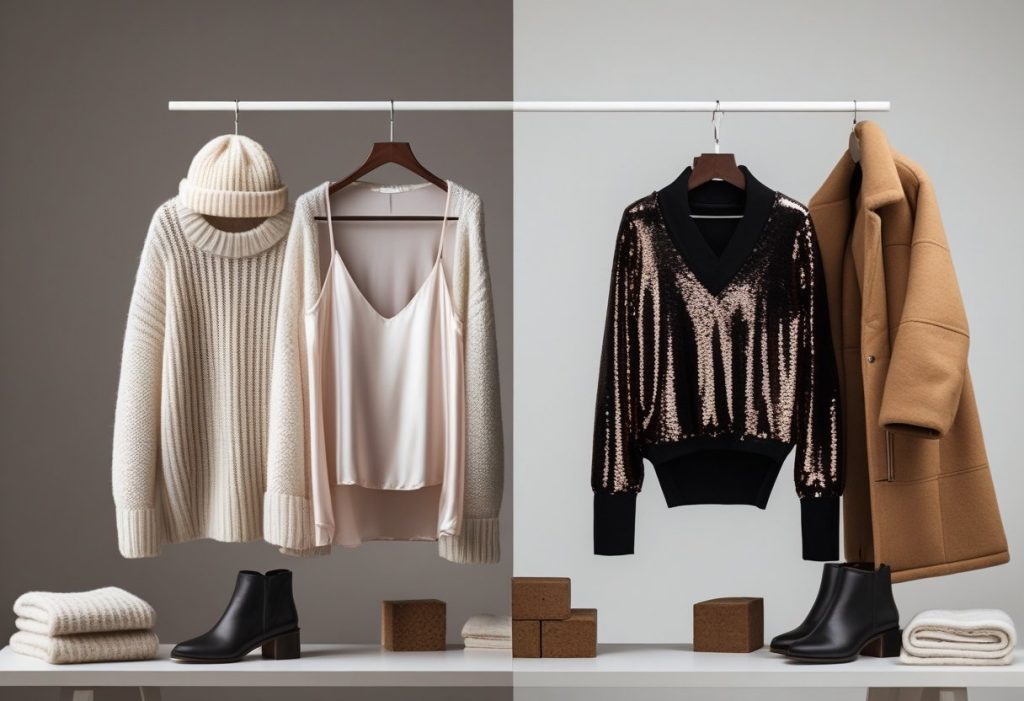
- Strategy 1: The Layer Shed. Start with a chic base, like a silk camisole or a sequined top, under your daytime sweater. When you arrive at your destination, simply remove the bulky sweater to reveal your glamorous core.
- Strategy 2: The Accessory Upgrade. Swap your practical beanie and puffer coat for a statement wrap, a sleek leather jacket, and a clutch bag. Change your boots for a pair of elegant heeled booties.
- Strategy 3: The Shoe Switch. Keep your core outfit the same but change from your daytime ankle boots into a pair of sophisticated heels or polished leather loafers. This instantly elevates any ensemble.
Caring for Your Winter Wardrobe
Investing in quality pieces means taking care of them so they last for seasons to come.
- Follow Care Labels: Always check the label. Many wool and down items require specific care.
- Proper Storage: Never store your winter knits on wire hangers, which can distort their shape. Fold sweaters and store them in a cool, dry place. Use cedar blocks to deter moths.
- Cleaning Coats: Have your wool coats professionally cleaned at the end of the season before storing them. For puffers, follow manufacturer instructions carefully to maintain their loft and water resistance. For more detailed tips, read our blog on caring for your winter knits.
Conclusion: Your Winter, Your Style
Dressing for cold weather is an empowering exercise in combining practicality with personal expression. By embracing the science of layering, investing in key pieces, and not being afraid to accessorize, you can build a winter wardrobe that is as functional as it is fashionable. Let this winter be the season you fall in love with getting dressed again.
At Outfit Aura, we are here to support your style journey every step of the way. Explore our thoughtfully curated collections to find the pieces that will make your winter wardrobe truly magical. Stay warm, stay stylish, and own the cold.
Frequently Asked Questions (FAQs)
1. How can I stay warm in the winter without looking bulky?
The key is strategic layering with thin, high-performance materials. A merino wool base layer under a fine-gauge sweater and a well-fitted coat provides significant warmth without the bulk. Also, focus on streamlined silhouettes and using accessories to seal in heat.
2. What are the best fabrics to wear in cold, wet weather?
For wet conditions, your outer layer must be waterproof (like Gore-Tex or a similar membrane). Underneath, wear synthetic fabrics (polyester, nylon) or wool, which retain their insulating properties even when damp. Avoid cotton entirely.
3. Can I wear a dress or a skirt in the winter?
Absolutely! The secret is to pair them with the right base layers and accessories. Wear your dress or skirt over a pair of thermal tights or fleece-lined leggings. Combine this with knee-high boots and a warm coat for a chic and comfortable winter look.
4. How many layers should I wear in freezing temperatures?
Stick to the three-layer system: a moisture-wicking base layer, an insulating mid-layer, and a protective outer shell. You can adjust the thickness of your mid-layer based on the temperature and your activity level. It’s better to have multiple thin layers than one or two bulky ones.
5. What type of winter boots are both stylish and functional?
Look for boots made from waterproof leather or suede (with a protective spray) with a thick, non-slip rubber sole. Styles like combat boots, chic ankle boots with a warm lining, and some modern, streamlined winter boots from brands like Sorel or Blundstone perfectly marry form and function.
6. How do I protect my skin from the harsh winter weather?
Your wardrobe isn’t just about clothes. The cold wind can be brutal on your skin. Always wear a moisturizer with SPF (the sun still shines in winter!) and use a rich lip balm. Covering your skin with fabrics like silk or cashmere can also help prevent irritation and dryness.