Welcome to Outfit Aura, your premier destination for curating a lifestyle that speaks through your style. In the grand tapestry of fashion, few elements are as fundamental, as expressive, and as universally essential as the shoe. It is the cornerstone upon which an outfit is built, the silent workhorse that carries us through our days, and a powerful statement of personal identity, cultural affiliation, and even social status.
From the moment humanity first wrapped animal hides around their feet for protection to the contemporary era of AI-designed sneakers and sustainable materials, shoes have traversed a remarkable journey. They are not merely accessories; they are tools for performance, artifacts of history, and vessels of art. This ultimate guide is designed to be your comprehensive resource, delving deep into the fascinating universe of footwear. We will explore the rich history that shaped modern styles, decode the anatomy of a shoe, navigate the vast landscape of different types for every conceivable purpose, and provide expert advice on how to select, style, and care for your collection.
Whether you are a seasoned sneakerhead, a professional seeking the perfect oxford, or someone simply looking to understand what makes a great walking shoe, this article promises to equip you with the knowledge to step forward with confidence and style. Let’s embark on this journey together, one step at a time, and unlock the full potential of what it means to wear not just shoes, but a key component of your aura.
Ultimate Shoe Guide
Welcome to Outfit Aura — your premier destination for curating a lifestyle that speaks through your style. …
A Walk Through Time: The Evolution of Ultimate Shoe Guide
To truly appreciate the shoe, one must understand its origins and evolution. The story of footwear is intrinsically linked to the story of human civilization itself. The earliest known shoes, dating back nearly 10,000 years, were simple sandals made of sagebrush bark, discovered in what is now Oregon. These primitive designs served one primary purpose: protection from harsh terrain and extreme temperatures. As societies advanced, so did their footwear. In ancient Egypt, sandals became markers of social class, with pharaohs wearing pointed versions made of precious materials while commoners went barefoot or used palm leaves.
The ancient Greeks and Romans refined the sandal, creating intricate designs like the carbatina and the caligula, which offered more structure and were essential for their vast marching armies. The Middle Ages saw the rise of the turnshoe, a method where the leather upper was stitched inside out and then turned right-side out, creating a more durable and comfortable seam. This period also introduced the Poulaine, a style notable for its absurdly long, pointed toes that sometimes had to be tied to the wearer’s knees. Ultimate Shoe Guide
The true revolution, however, came with the Renaissance and the advent of heels. Initially designed for Persian cavalrymen to secure their feet in stirrups, heels were adopted by European aristocracy as a symbol of power and status, famously embraced by King Louis XIV of France. Ultimate Shoe Guide
The 18th and 19th centuries brought about industrialization, which forever changed shoe production. The invention of the rolling machine for leather and, most importantly, the sewing machine, mechanized what was once a purely manual craft. The Industrial Revolution paved the way for mass production, making shoes more affordable and accessible to the general public.
The 20th century was a whirlwind of innovation and cultural shifts: the birth of the sneaker with brands like Keds and Converse, the introduction of the stiletto heel by designers like Roger Vivier for Christian Dior, the rise of athletic brands like Nike and Adidas that transformed sports performance, and the counter-cultural movements that adopted boots like Dr. Martens as symbols of rebellion. Today, we live in an era of hyper-specialization and rapid trend cycles, where a single shoe can be a piece of cutting-edge technology, a high-fashion statement, and a vintage collectible all at once. Ultimate Shoe Guide
Understanding this history is crucial, as every modern style we wear carries the echo of centuries of innovation and cultural significance. For a deeper dive into how historical styles influence modern fashion, check out our article on The History of Fashion Trends. Ultimate Shoe Guide
Deconstructing the Ultimate Shoe Guide: A Detailed Anatomy Lesson
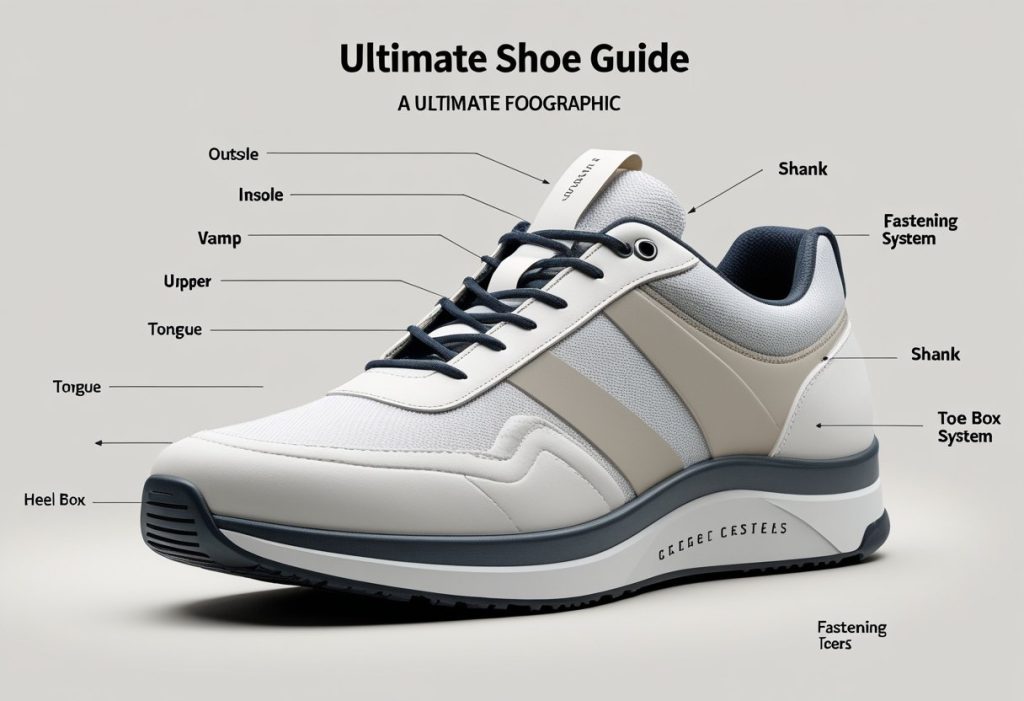
Every shoe is a complex assembly of multiple components, each with a specific function that contributes to its overall comfort, durability, and aesthetics. Knowing the basic anatomy empowers you to make better purchasing decisions and understand what to look for in a quality pair. Starting from the bottom, the outsole is the part of the shoe that makes contact with the ground. It is typically made from durable materials like rubber, leather, or polyurethane and features treads for traction.
Above the outsole lies the midsole, which is the primary cushioning layer, often made from foam materials like EVA (Ethylene-Vinyl Acetate) or PU (Polyurethane) that absorb impact and provide support. The insole or sock liner is the removable footbed inside the shoe that offers additional comfort and can often be replaced with orthotics.
The upper is the entire part of the shoe that covers the Ultimate Shoe Guide, and it is composed of several elements: the vamp covers the front of the foot, the quarter covers the sides and heel, and the tongue protects the top of the foot from lace pressure.
The heel counter is a rigid material embedded in the rear of the shoe that cradles the heel and provides crucial stability, preventing excessive movement that can lead to blisters or injuries. The toe box is the front part of the shoe that houses the toes; its shape and volume are critical for comfort and foot health. Ultimate Shoe Guide
Finally, the fastening system, whether it’s laces, straps, buckles, or elastic, is what secures the shoe to the foot. In high-quality footwear, you will also find a shank, a rigid piece of material (often steel or nylon) between the insole and outsole in the arch area that provides support and prevents the shoe from flexing too much. Ultimate Shoe Guide
Understanding these components allows you to appreciate the engineering behind a comfortable dress shoe from Allen Edmonds or the advanced propulsion system in a running shoe from Brooks Running. When you’re shopping for your next pair, you’ll be able to look beyond the color and style and assess the quality of its construction, ensuring your investment is a sound one. Ultimate Shoe Guide
The Ultimate Shoe Directory: A Style for Every Occasion
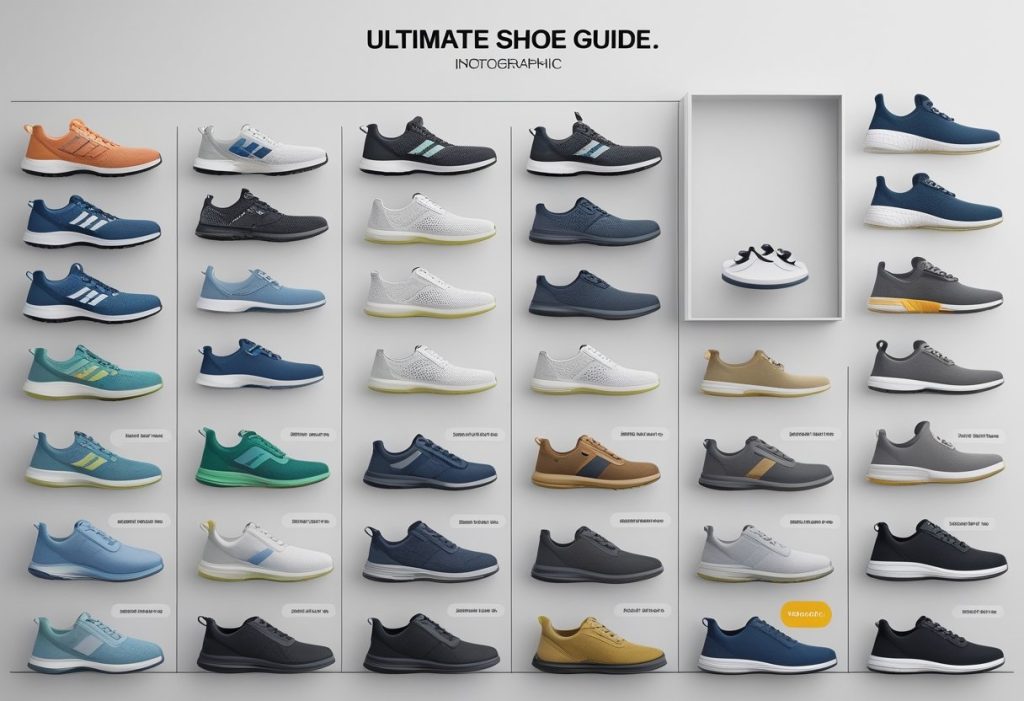
The modern shoe market is incredibly diverse, offering specialized footwear for virtually every activity and aesthetic. Navigating this landscape can be daunting, so we’ve broken down the primary categories to help you build a versatile and functional collection.
1. Athletic & Performance Shoes: This category is defined by function and technological innovation. Running shoes are engineered with specific cushioning and support systems for different gait types (neutral, stability, motion control). Cross-training shoes are designed for multi-directional movement, offering more lateral support than a running shoe. Basketball shoes prioritize ankle support, cushioning for jumps, and traction for quick pivots.
Hiking boots are built with rugged outsoles, waterproof membranes like Gore-Tex, and ankle support for uneven terrain. Cleats are used for sports like soccer and football to provide grip on grass or turf. The technology in this segment is constantly evolving, with brands investing heavily in research to enhance athlete performance. Ultimate Shoe Guide
2. Casual & Everyday Wear: This is the backbone of most people’s shoe collections. Sneakers reign supreme here, with endless sub-categories. From the timeless classic of leather sneakers to the comfort of slip-ons and the cultural phenomenon of limited-edition basketball sneakers, this style offers unparalleled versatility.
Loafers are a step up in formality from sneakers, perfect for smart-casual outfits. Espadrilles, with their recognizable rope soles, are a summer staple. Boat shoes, originally designed for sailing, offer a preppy, comfortable option for warm weather. Sandals range from simple flip-flops for the beach to structured leather designs that can be dressed up. Ultimate Shoe Guide
3. Formal & Dress Shoes: This category embodies elegance and tradition. The Oxford is the most formal, characterized by a “closed” lacing system where the quarters are stitched under the vamp, creating a sleek and minimalist look. The Derby features an “open” lacing system, making it slightly less formal and often more comfortable for those with higher insteps. The Monk Strap offers a distinctive alternative to laces, using a buckle and strap system.
Loafers can also cross into this category, especially in polished leather or suede. For women, Pumps are the quintessential dress shoe, varying in heel height and toe shape. Heeled Sandals and Slingbacks are other popular options for formal events. The key to formal shoes is often in the quality of the leather, the refinement of the last (the mold the shoe is built on), and the precision of the construction, such as Goodyear welting, which allows for resoling and extends the shoe’s lifespan for decades. Ultimate Shoe Guide
4. Boots: Boots are defined by their coverage, extending above the ankle. They are incredibly versatile, spanning workwear, fashion, and outdoor activities. Chelsea Boots, with their elastic side panels and sleek profile, are a modern classic that pairs well with everything from jeans to suits. Chukka Boots are ankle-high boots with two or three sets of eyelets, offering a smart-casual aesthetic. Combat Boots are rugged, durable, and often associated with a utilitarian or punk-rock style.
Work Boots, like those from heritage brands, are built for durability and safety, often featuring steel toes and oil-resistant soles. Knee-High and Over-the-Knee Boots are a fashion-forward statement, often seen in fall and winter collections. Ultimate Shoe Guide
5. Specialized & Niche Footwear: This includes shoes designed for very specific purposes. Dance shoes like ballet flats, jazz shoes, or character shoes are built for flexibility and movement. Cycling shoes have stiff soles for efficient power transfer and cleats to attach to pedals.
Climbing shoes are aggressively downturned and made of sticky rubber to grip onto small rock holds. Understanding the purpose of each type ensures you not only look good but are also appropriately equipped for your activities, enhancing both your performance and your comfort. To see how we style these different types of shoes for various occasions, explore our Lookbook Gallery.
The Art of the Perfect Fit: Why Size Matters More Than Style
A beautiful shoe that doesn’t fit properly is, ultimately, a bad shoe. Ill-fitting footwear is the root cause of a multitude of problems, from immediate discomfort and blisters to long-term issues like bunions, hammertoes, plantar fasciitis, and chronic knee and back pain. The quest for the perfect fit is therefore not about vanity, but about health and well-being. The first and most crucial step is to get your feet measured professionally at least once a year.
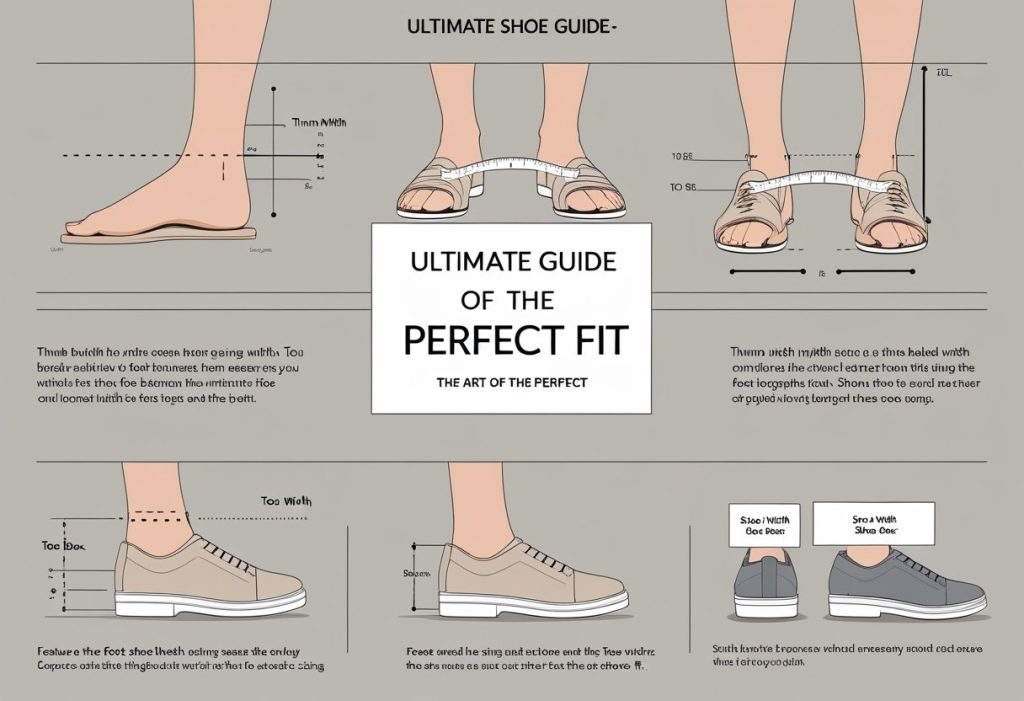
Our feet change over time due to factors like age, weight fluctuations, and pregnancy. When trying on shoes, do so in the afternoon or evening, as feet naturally swell throughout the day. There should be about a thumb’s width of space (roughly 3/8 to 1/2 an inch) between your longest toe (which isn’t always the big toe) and the end of the shoe. The shoe should feel snug but not tight, with enough room in the toe box to wiggle your toes freely. Ultimate Shoe Guide
Pay close attention to the width as well. Many foot problems arise from wearing Ultimate Shoe Guide that are too narrow, forcing the foot into an unnatural shape. The widest part of your foot, the ball, should align comfortably with the widest part of the shoe. Don’t fall into the trap of assuming you can “break in” a painfully tight shoe; quality leather will soften and mold to your foot, but it should not cause significant pain from the start. Always try on both shoes and walk around on a hard surface. Be mindful of materials; synthetic materials often don’t stretch as much as genuine leather.
Furthermore, don’t be a slave to the number on the box. Sizing can vary dramatically between brands and even between different styles from the same brand. Your focus should be on how the shoe feels, not whether it’s your “usual” size. Investing in a proper fit is an investment in your mobility and long-term health, ensuring that your journey with your beloved shoe collection is a pain-free one. Ultimate Shoe Guide
The Style Synergy: Mastering the Art of Pairing Ultimate Shoe Guide with Your Outfit
Shoes possess the transformative power to make or break an outfit. They can either anchor a look with sophistication or introduce a disruptive element that throws the entire ensemble off balance. Mastering the art of pairing shoes with clothing is a fundamental skill in cultivating personal style. The most basic rule of thumb is to consider the formality of the occasion and ensure your shoes align with it.
A well-tailored suit, for example, calls for the refined elegance of Oxfords, Derbies, or polished loafers, while sneakers would create a jarring contrast in a traditional business setting (though the modern “smart casual” trend has blurred these lines in some creative industries). For jeans, the options are vast. Sneakers, boots, loafers, and even some casual derbies can work beautifully. Darker wash jeans are more versatile and can handle dressier shoes, while distressed denim pairs naturally with sneakers or rugged boots.
Color coordination is another key principle. A safe and classic approach is to match your shoe color to another element in your outfit. For instance, brown shoes with a brown belt, or black shoes with a black belt. However, don’t be afraid to use shoes as a pop of color. A neutral outfit of navy, grey, or beige can be instantly elevated with a pair of burgundy, forest green, or even a tasteful bright-colored shoe. For women, nude-colored pumps are a wardrobe hero as they elongate the leg line, making them incredibly versatile with dresses and skirts of any color.
Texture also plays a vital role in adding depth and interest. Suede shoes offer a softer, more casual alternative to polished calfskin and work wonderfully in fall and winter. Patent leather adds a glossy, formal touch perfect for black-tie events. The goal is to create a sense of harmony and intention. Your shoes should feel like a cohesive part of the overall narrative you’re presenting, not an afterthought. For daily inspiration and specific pairing ideas, follow our Style Guides on Outfit Aura, where we break down these principles with visual examples.
Material Matters: A Deep Dive into Leather, Synthetics, and Beyond
The materials used in a shoe’s construction are the primary determinants of its appearance, comfort, durability, breathability, and, of course, price. Understanding the common materials empowers you to make informed choices based on your needs, values, and budget. Ultimate Shoe Guide
Leather: This is the gold standard for many types of footwear, prized for its durability, breathability, and unique ability to develop a patina over time. However, not all leather is created equal. Full-Grain Leather is the highest quality, comprising the outermost layer of the hide. It retains the natural grain and is the most durable and breathable type. Over time, it develops a rich, unique character. Top-Grain Leather has had the very outermost surface sanded away to remove imperfections, making it softer and more pliable but slightly less durable than full-grain.
It’s often used in dress shoes. Genuine Leather is a misleading term; it technically means the product contains real leather, but it often refers to the lower layers of the hide that have been heavily processed. It is less durable and does not develop a patina. Suede is created from the inner layer of the hide (a split) and is brushed to create a soft, napped surface. It is stylish and soft but more susceptible to water and stains. Nubuck is similar to suede but is made from the outer grain side of the hide, sanded down. It is more durable than suede but has a similar velvety feel.
Synthetic Materials: This category includes polyurethane (PU), polyvinyl chloride (PVC), and various textiles. The primary advantages of synthetics are their low cost, consistency, and the fact they are vegan. High-tech synthetics can also be engineered to be very durable and waterproof. However, they generally lack the breathability of natural leather and do not mold to the shape of your foot over time. They are also less repairable and tend to have a shorter lifespan, often cracking or peeling with extensive wear.
Textiles: Canvas, cotton, knit uppers (like in many modern sneakers), and wool are popular for casual and athletic shoes. They are typically lightweight, breathable, and flexible. The advent of engineered knits, such as the Nike Flyknit or Adidas Primeknit, has revolutionized athletic footwear by providing targeted support and stretch with a sock-like fit. However, textiles are generally less water-resistant and protective than leather or synthetics.
Rubber: Primarily used for outsoles, rubber is essential for traction and durability. Carbon rubber is exceptionally hard-wearing and is often used in the heels of running shoes, while blown rubber is lighter and provides more cushioning. The choice of material is a balance of aesthetics, performance, ethics, and budget. A well-made full-grain leather shoe from a brand like Thursday Boot Company can be a lifetime investment, while a synthetic fashion shoe serves a trend-driven purpose. For those interested in sustainable options, explore our guide to Eco-Friendly Fashion Brands.
The Care and Keeping of Your Collection: Preservation for Longevity
A quality shoe is an investment, and like any good investment, it deserves proper care to protect and extend its life. A little routine maintenance can keep your shoes looking pristine for years, even decades, making the initial cost more justifiable. The cornerstone of shoe care is protection and cleaning. For leather shoes, this means using a Ultimate Shoe Guide tree made of cedar wood after every wear. Cedar absorbs moisture, helps the shoe retain its shape, and prevents creases from setting deeply. Before wearing new leather shoes, apply a protective spray to guard against water and stains.
Regular cleaning with a damp cloth to remove dirt and dust is essential. Conditioning the leather every few months (depending on wear) is crucial to prevent it from drying out, cracking, and losing its luster. Use a cream polish that matches the shoe’s color to nourish the leather and cover up minor scuffs, followed by a wax polish for a high-shine finish and an additional protective layer.
Suede and nubuck require a different approach. They should be brushed regularly with a suede brush to lift the nap and remove surface dirt. A specialized suede eraser can tackle scuff marks, and a protective spray formulated for nubuck and suede is a must to repel water and oil-based stains. For textile sneakers, a mixture of mild detergent and water with a soft brush usually does the trick. For stubborn stains on white sneakers, a paste of baking soda and vinegar can be effective. Always allow your shoes to dry naturally at room temperature away from direct heat sources, as intense heat can cause leather to crack and glue to fail. Rotating your shoes is another critical practice; wearing the same pair two days in a row doesn’t give the materials enough time to fully dry and recover from the previous day’s stress.
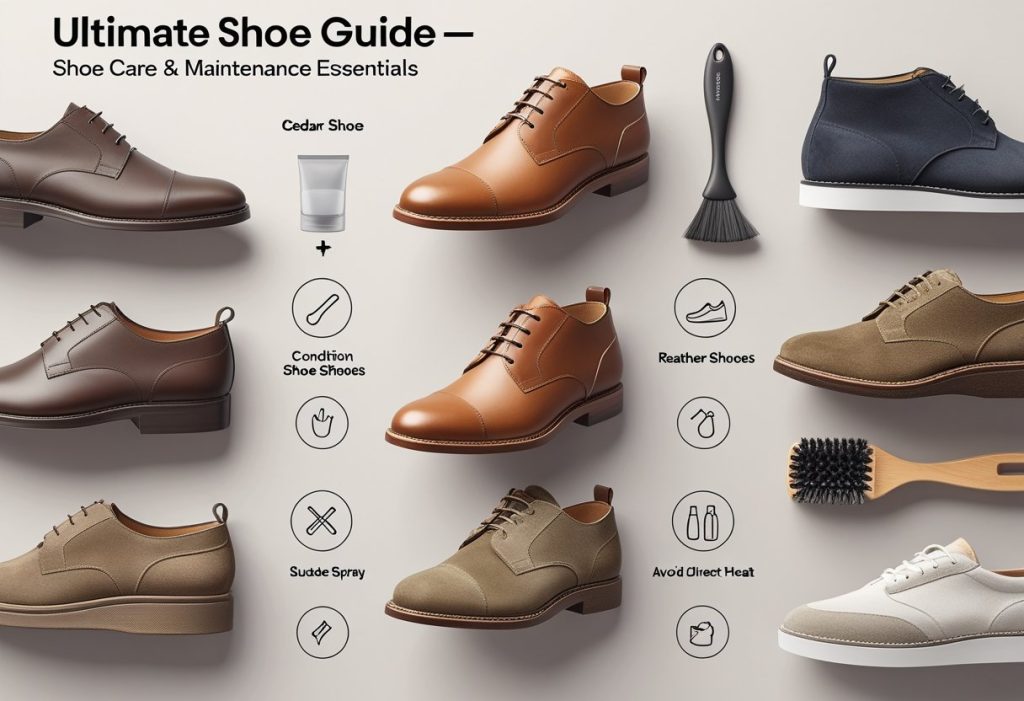
By dedicating a small amount of time to maintenance, you transform your shoe collection from a series of disposable items into a curated archive of lasting quality and style. Ultimate Shoe Guide
Stepping into the Future: Sustainability and Innovation in Ultimate Shoe Guide
The footwear industry, like much of the fashion world, is at a pivotal moment, grappling with its environmental impact and embracing a wave of technological innovation. The traditional model of “take, make, dispose” is being challenged by a growing demand for sustainability and ethical production. In response, many brands are pioneering new approaches. This includes using recycled materials, such as polyester made from plastic bottles recovered from the ocean, recycled rubber for outsoles, and even recycled foam for midsoles. Bio-based materials are also gaining traction, with alternatives derived from algae, mushrooms (mycelium), pineapple leaves (Piñatex), apple pulp, and corn. These materials aim to reduce reliance on petroleum-based synthetics and conventional leather, whose production has a significant environmental footprint. Ultimate Shoe Guide
Beyond materials, the very business models are evolving. The rise of the resale and secondhand market, fueled by platforms like Depop and Grailed, extends the life of shoes and reduces waste. Brands are also offering repair and resoling services to combat the culture of disposability. On the innovation front, technology is revolutionizing both performance and customization. 3D printing is being used to create midsoles with complex, lattice-based structures that offer unprecedented cushioning and energy return, as seen in adidas’s Futurecraft.Strung project.
Ultimate Shoe Guide with embedded sensors can track metrics like step count, gait analysis, and even running form, providing valuable data to athletes. The future of footwear is one of conscious consumption, hyper-personalization, and a harmonious blend of nature and technology, where the shoes we wear are not only expressions of our style but also of our values. To stay updated on the latest in sustainable and tech-driven fashion, subscribe to the Outfit Aura newsletter. Ultimate Shoe Guide
Frequently Asked Questions (FAQs)
Q1: How many pairs of Ultimate Shoe Guide should a person own?
There is no magic number, as it depends entirely on your lifestyle, climate, and personal style. However, a versatile core collection might include: a reliable pair of running/athletic shoes, a classic pair of casual sneakers, a durable pair of boots for inclement weather, a pair of smart-casual shoes like loafers or derbies, and a formal pair like Oxfords or pumps. From there, you can expand based on your specific hobbies and fashion interests. Ultimate Shoe Guide
Q2: What is the difference between Oxfords and Derbies?
The key difference is in the lacing system. Oxfords have a “closed” lacing system where the quarters (the side pieces with the eyelets) are stitched under the vamp (the front part), creating a sleek and formal look. Derbies have an “open” lacing system where the quarters are stitched on top of the vamp. This makes Derbies generally a bit more relaxed and often more accommodating for those with higher insteps. Ultimate Shoe Guide
Q3: How can I make my Ultimate Shoe Guide last longer?
- Use cedar Ultimate Shoe Guide trees after every wear.
- Clean and condition leather shoes regularly.
- Use a protective spray for leather, suede, and textiles.
- Rotate your shoes; don’t wear the same pair two days in a row.
- Resole them when the outsoles wear down. A quality Goodyear-welted shoe can be resoled many times.
Q4: Are expensive Ultimate Shoe Guide really worth the investment?
For certain categories, yes. Expensive, well-constructed shoes (especially in Ultimate Shoe Guide and boots) often use higher-quality materials like full-grain leather, feature superior construction methods like Goodyear welting that allow for resoling, and are built on more anatomically supportive lasts. This results in better comfort, significantly greater durability, and a timeless style that transcends trends, making the cost-per-wear very low over its lifetime. Ultimate Shoe Guide
Q5: What are the most comfortable types of Ultimate Shoe Guide for all-day wear?
Look for shoes with adequate arch support, a cushioned midsole, and a roomy toe box. Styles known for all-day comfort include certain supportive sneakers (e.g., brands like Hoka, Brooks), quality leather loafers that have molded to your feet, certain types of walking shoes, and boots with cushioned insoles and good support, like many heritage work boots.
Q6: How can I tell if a Ultimate Shoe Guide is good quality?
- Material: Look for full-grain or top-grain leather uppers. Ultimate Shoe Guide
- Construction: Check the stitching; it should be even, tight, and straight. Ultimate Shoe Guide
- Sole: The outsole should be firmly attached with no gaps. A stitched (e.g., Blake or Goodyear welt) sole is a mark of high quality. Ultimate Shoe Guide
- Lining: A full leather or quality fabric lining is a good sign. Ultimate Shoe Guide
- Insole: A removable leather or cushioned insole indicates better comfort and repairability. Ultimate Shoe Guide
- Flex: The shoe should flex easily at the ball of the foot but remain stiff in the arch (indicating a supportive shank). Ultimate Shoe Guide
A quality shoe is an investment, and like any good investment, it deserves proper care to protect and extend its life. With the right routine, your footwear can stay in excellent condition for many years, making the initial cost far more worthwhile. The Ultimate Shoe Guide always begins with one essential rule: consistent care leads to longer-lasting shoes.
The foundation of shoe care is proper protection and cleaning. For leather shoes, this starts with using a cedar shoe tree after every wear. Cedar absorbs moisture, helps maintain the shoe’s shape, and prevents deep creasing. Before wearing new leather shoes, applying a protective spray is crucial for guarding against stains and water damage.
Regular cleaning also plays a major role. Wipe leather shoes with a damp cloth to remove dust, then condition the leather every few months to keep it soft and prevent cracking. A cream polish matching the shoe color restores richness and covers light scuffs. A wax polish adds shine and forms an additional protective layer. These simple steps can dramatically extend durability, as recommended in the Ultimate Shoe Guide.
Suede and nubuck require different methods. Use a suede brush to lift the nap and remove dirt. A suede eraser works well on stains, and a dedicated protective spray keeps the material safe from oil and water. Textile sneakers need gentle cleaning with mild detergent and water. For tougher marks on white sneakers, a paste of baking soda and vinegar can be surprisingly effective.
Finally, always let your shoes dry naturally at room temperature and avoid direct heat, which can cause leather to crack or glue to weaken. Rotating your footwear is also essential. Wearing the same pair on consecutive days prevents the materials from fully recovering. Small habits like these turn basic upkeep into long-term preservation — the ultimate goal of any Ultimate Shoe Guide.
Conclusion: Your Journey, Well-Shod
From the ancient sands of Egypt to the digital runways of today, the shoe has remained a constant and evolving companion to humanity. It is a fascinating intersection of art, science, history, and personal expression. We hope this exhaustive guide from Outfit Aura has provided you with not just information, but inspiration—to see the shoes in your closet not as mere objects, but as stories waiting to be worn, as tools for your ambitions, and as the foundational pieces that complete your unique aura. Remember, the best shoe for you is one that fits perfectly, serves its purpose, and, above all, makes you feel confident with every step you take. Now go forth and walk your path with intention and style. Ultimate Shoe Guide