OutfitAura.pro – Redefining Men’s Style with Intention
Introduction: Beyond the Fabric
Performative Masculinity in Modern Fashion: beyond the fabric. In today’s visually saturated world, clothing has evolved from simple necessity into a deliberate language of identity. For men, dressing is increasingly performative — a conscious presentation designed to communicate values, status, and intention. At OutfitAura.pro, we believe every outfit tells a story: one that shapes how others see you and how you experience yourself. This exploration examines the psychology behind sartorial choices, the cultural scripts that inform male style, and practical steps for building an intentional wardrobe that amplifies authentic identity rather than masking it. Performative Masculinity in Modern Fashion
In today’s visually saturated world, clothing has evolved from mere necessity to a complex language of identity. For men, fashion has become increasingly performative—a deliberate presentation that communicates values, aspirations, and social positioning. At OutfitAura.pro, we believe every outfit tells a story, and modern masculinity embraces this narrative potential. This 3000-word exploration delves into how contemporary male fashion functions as performance, the psychology behind sartorial choices, and how intentional dressing can transform not just appearance but self-perception and social interaction. Performative Masculinity in Modern Fashion
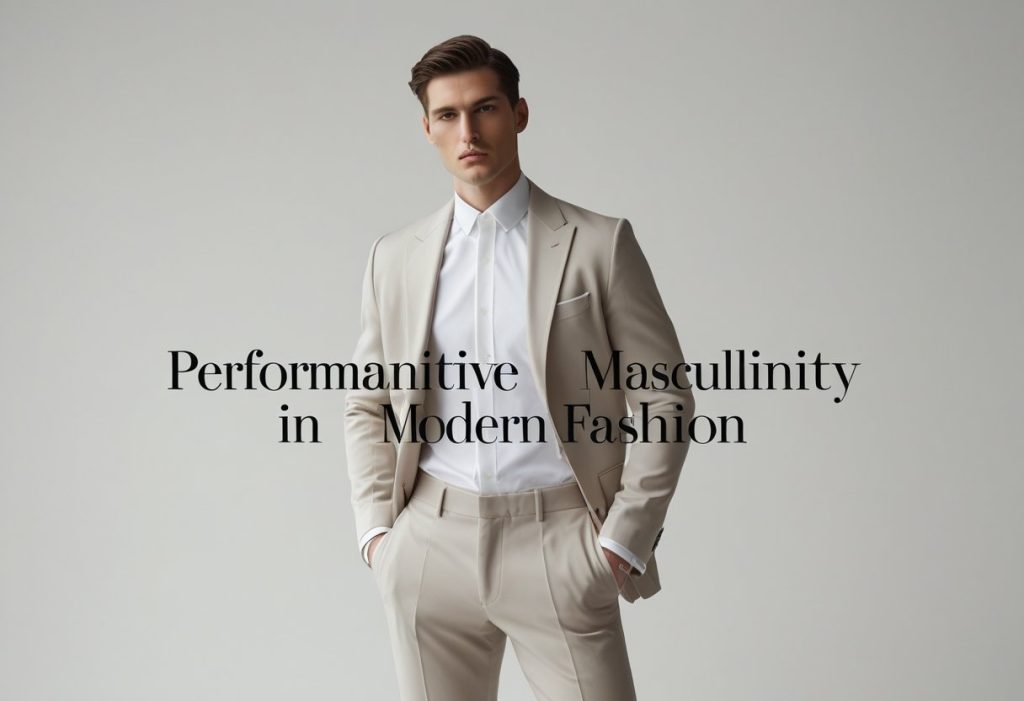
What is Performative Masculinity in Modern Fashion?
Performative fashion refers to clothing choices made with audience awareness—whether that audience is the public, professional circles, social peers, or even oneself. Unlike purely functional dressing, performative outfits are curated to elicit specific responses, convey particular identities, or fulfill social roles. For men, this performance has expanded dramatically beyond traditional norms, creating both opportunities for expression and new pressures to conform to evolving standards. Performative Masculinity in Modern Fashion
Historically, male fashion was predominantly about status signaling within rigid class structures. Today, it encompasses expressions of individuality, political alignment, cultural awareness, and psychological states. The businessman’s tailored suit, the creative professional’s curated casualwear, the fitness enthusiast’s athleisure—all are performances with distinct scripts and expected outcomes. Performative Masculinity in Modern Fashion
The Psychology of Sartorial Performance
Why do men engage in fashion as performance? The reasons are multifaceted. Clothing affects not only how others perceive us but fundamentally alters our own psychology—a phenomenon known as “enclothed cognition.” Studies demonstrate that what we wear influences our confidence, decision-making abilities, and even cognitive processes. The lab coat in one experiment literally made participants more attentive. Performative Masculinity in Modern Fashion
Performative Masculinity in Modern Fashion: beyond the fabric. In today’s visually saturated world, clothing has evolved from simple necessity into a deliberate language of identity. For men, dressing is increasingly performative — a conscious presentation designed to communicate values, status, and intention. At OutfitAura.pro, we believe every outfit tells a story: one that shapes how others see you and how you experience yourself. This exploration examines the psychology behind sartorial choices, the cultural scripts that inform male style, and practical steps for building an intentional wardrobe that amplifies authentic identity rather than masking it. Performative Masculinity in Modern Fashion
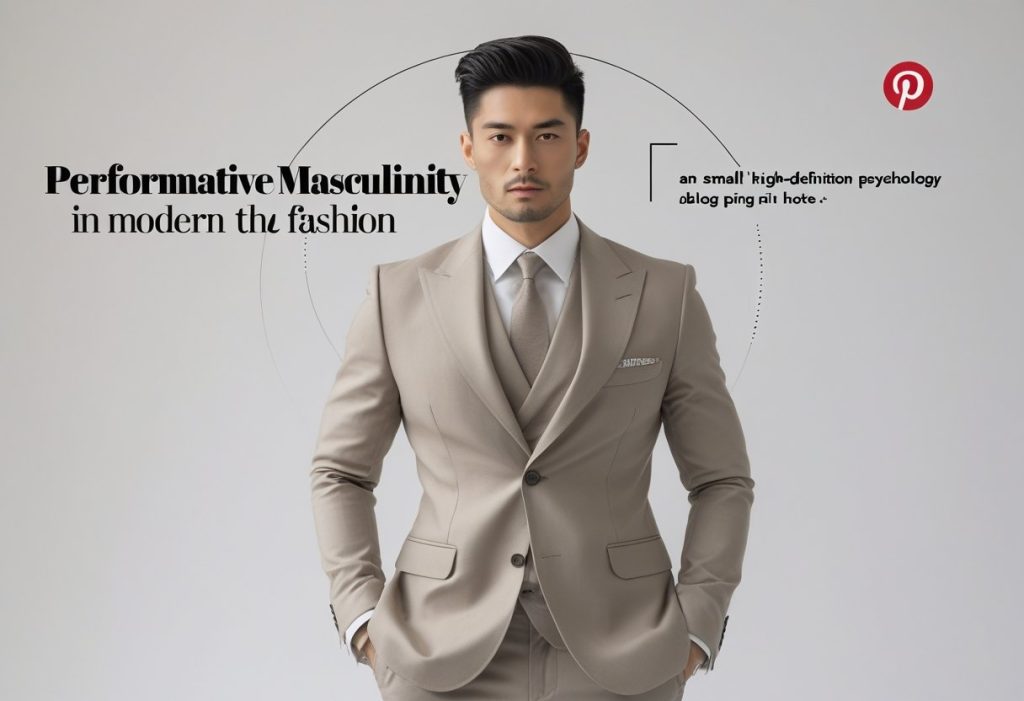
The Evolution of Performative Masculinity in Modern Fashion
Male fashion performance has undergone radical transformation. The mid-20th century offered limited scripts: the gray-flannel-suited organization man, the rebellious leather-jacketed outsider, or the casual weekend wearer. Today’s landscape is exponentially more diverse. Social media, globalization, and shifting gender norms have expanded the repertoire of acceptable male presentation. Performative Masculinity in Modern Fashion
Streetwear performs urban authenticity and cultural connectivity. Techwear performs futurism and functionality. The “old money aesthetic” performs established wealth and discretion. Cottagecore adjacent menswear performs environmental consciousness and simplicity. Each style comes with its own coded meanings and community expectations—a visual language that members learn to speak and interpret. Performative Masculinity in Modern Fashion
Key Elements of Performative Masculinity in Modern Fashion
1. The Foundation: Silhouette and Fit
The most fundamental performance in menswear happens through silhouette. The difference between slim-fit tailoring and oversized casualwear creates entirely different narratives. At OutfitAura.pro, we emphasize that fit is the first communicator—it speaks of the wearer’s understanding of their body, their attention to detail, and their stylistic intentions. Performative Masculinity in Modern Fashion
2. Fabric as Character Development
Textures tell stories. Rough tweeds perform tradition and durability. Technical fabrics perform innovation and functionality. Luxe cashmere performs refined comfort. The conscious combination of textures creates depth in the sartorial performance, inviting closer inspection and communicating multi-dimensionality. Performative Masculinity in Modern Fashion
3. Color Psychology in Menswear
Color performs emotional and psychological states with remarkable efficiency. The monochromatic minimalist performs control and focus. The bold pattern wearer performs confidence and creativity. Earth tones often perform stability and connection to nature. Understanding color’s performative power allows men to curate their visual impact intentionally. Performative Masculinity in Modern Fashion
4. Accessories as Punctuation
The carefully chosen watch, the intentional jewelry, the selective bag—accessories provide emphasis in the fashion performance. They’re the highlights that guide the audience’s attention to particular aspects of the wearer’s identity, whether that’s luxury appreciation, practical preparedness, or cultural affiliation. Performative Masculinity in Modern Fashion
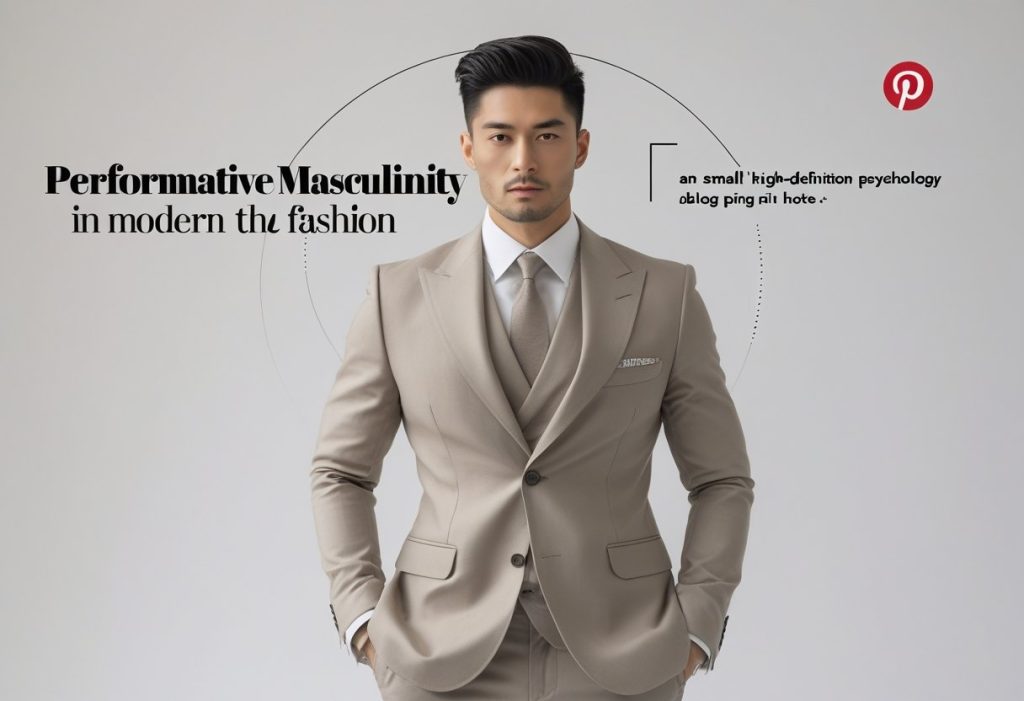
Contextual Performances: Dressing for the Audience
Professional Theater: The Workplace Outfit
Corporate environments remain some of the most rigorously performative fashion spaces. The power suit, the creative agency uniform, the tech company casual—each performs alignment with organizational values. The rise of “executive casual” represents an intriguing hybrid performance, attempting to signal both authority and approachability simultaneously. Performative Masculinity in Modern Fashion
Social Stages: Weekend and Evening Wear
Social situations offer more experimental performance opportunities. Date night outfits perform romance and effort. Friend gathering attire performs tribal belonging. Event-specific dressing (weddings, galleries, restaurants) performs social fluency and respect for occasion. Performative Masculinity in Modern Fashion
Digital Personas: Social Media Style
The digital realm has created entirely new performance venues. Instagram outfits are crafted for rectangular frames, often prioritizing visual impact over tactile experience. The “fit pic” is pure performance—a curated presentation of self for virtual consumption, complete with aspirational settings and deliberate styling. Performative Masculinity in Modern Fashion
The Authenticity Paradox
A crucial tension in performative fashion is the quest for authenticity. When does styling become costume? The most effective sartorial performances feel genuine because they align with the wearer’s actual identity rather than creating a complete facade. The difference lies in amplification versus invention. Successful performative fashion amplifies authentic aspects of personality, making them legible to observers. Performative Masculinity in Modern Fashion
At OutfitAura.pro, we guide men toward performances that feel like natural extensions of self. This might mean adapting trends to personal comfort levels, choosing quality pieces that reflect genuine values, or developing a signature style that evolves organically rather than reacting to every micro-trend. Performative Masculinity in Modern Fashion
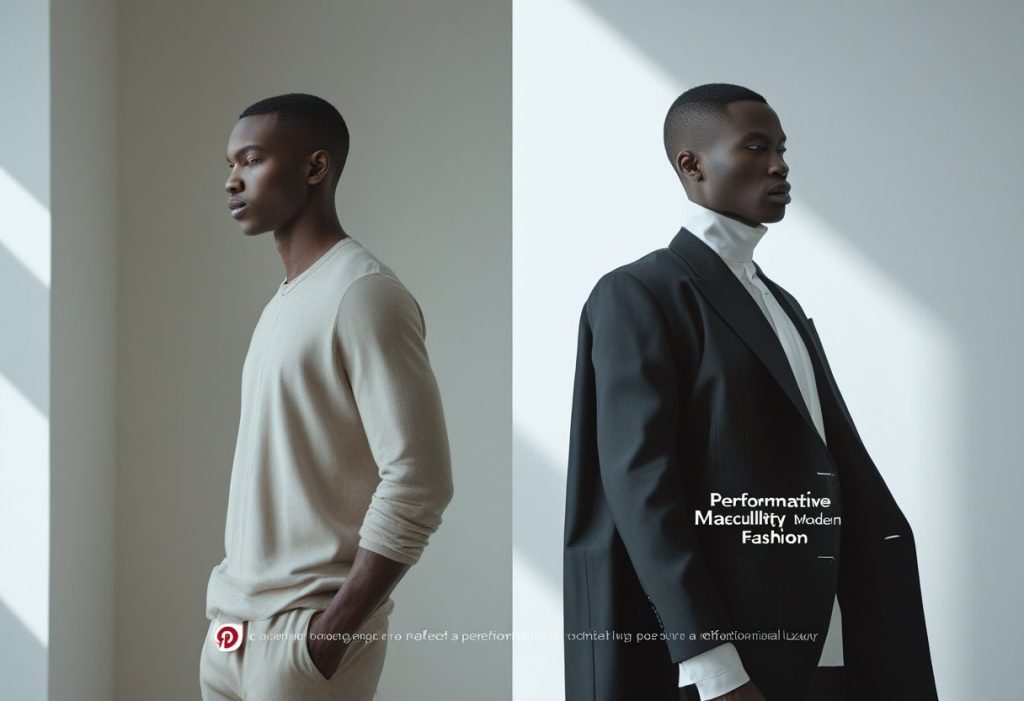
Cultural and Subcultural Performances
Fashion remains one of the primary ways men perform cultural and subcultural affiliations. The subtle details—a particular hat style, specific brand allegiance, or regulated color combinations—signal membership in communities ranging from sneakerheads to heritage workwear enthusiasts, from high fashion devotees to outdoor adventure communities.
These sartorial performances create belonging while simultaneously establishing hierarchies within subgroups. The depth of knowledge displayed through outfit choices (recognizable only to other insiders) performs expertise and commitment level within the community.
The Business of Performance: Fashion Industry’s Role
The fashion industry both responds to and creates demand for performative outfits. Marketing campaigns sell not just garments but entire identities and lifestyles. Brands cultivate aesthetic universes that consumers can inhabit through their purchases. This commercial dimension adds complexity to personal style development, as men navigate between self-expression and corporate-influenced performances.
Sustainable and ethical fashion adds another performative layer. Wearing certain brands or styles now frequently performs environmental consciousness, support for fair labor, or rejection of fast fashion—a morality performance that has become increasingly significant in consumer choices.
Practical Guide: Developing Your Intentional Style
Step 1: Self-Audit
Begin by identifying what you want your clothing to perform. Confidence? Creativity? Reliability? Authority? Different situations may call for different primary performances.
Step 2: Context Analysis
Map your regular environments and their sartorial expectations. Note where you have flexibility for personal expression versus where conventions are stricter.
Step 3: Building a Versatile Foundation
Invest in quality foundational pieces that can perform multiple roles through different styling. A well-tailored blazer, for instance, can perform professionalism, casual sophistication, or even creative edge depending on pairing.
Step 4: Signature Development
Identify 2-3 style elements that feel authentically you—whether that’s a preference for particular colors, an accessory category, or a fit style. Consistently incorporating these creates a recognizable personal performance.
Step 5: Iterative Refinement
View your style as an evolving performance rather than a fixed presentation. Regularly assess what’s working, what feels inauthentic, and what new elements might enhance your sartorial communication.
Frequently Asked Questions (FAQs)
Q: Isn’t “performative” dressing inherently inauthentic?
A: Not necessarily. All social interaction involves some performance—we adjust our communication style for different contexts while maintaining core identity. Thoughtful fashion choices similarly allow us to highlight different authentic aspects of ourselves for different situations.
Q: How can I balance personal style with workplace dress codes?
A: Identify the non-negotiable elements of your workplace requirements, then find your expression within those boundaries. This might mean playing with textures within a suit-based dress code, or choosing distinctive accessories in business casual environments.
Q: What if I enjoy fashion but worry about being judged?
A: Start with subtle experiments in low-stakes environments. Gradually expand your comfort zone as you build confidence. Remember that any style choice will receive varied responses—focus on developing outfits that make you feel like your best self.
Q: How many distinct “performances” should I have in my wardrobe?
A: Most men benefit from 3-4 clearly defined outfit approaches: professional, smart casual, relaxed casual, and possibly a specialized category for hobbies or frequent activities. Within these, you can have variations that allow for mood and occasion differences.
Q: Can performative dressing help with confidence issues?
A: Absolutely. The psychological principle of “embodied cognition” shows that how we dress directly impacts how we feel and act. Intentionally choosing outfits that perform confidence can actually help cultivate genuine self-assurance over time.
Q: How do I avoid spending excessively on constantly changing trends?
A: Invest in timeless quality pieces for your foundational wardrobe. Use trend-driven items as smaller, seasonal updates through accessories or less expensive pieces. At OutfitAura.pro, we emphasize the 70/30 rule: 70% timeless investments, 30% trend experimentation.
Q: What’s the biggest mistake men make in performative dressing?
A: Choosing outfits that perform someone else’s identity rather than their own. The most effective style performances feel like natural extensions of personality rather than costumes.
The Future of Performative Masculinity
As gender norms continue evolving, the landscape of male fashion performance will expand further. We’re seeing increased blending of traditionally masculine and feminine elements, greater emphasis on sustainability as performance, and the growing influence of digital identity on physical presentation. The metaverse and augmented reality may soon add entirely new dimensions to sartorial performance.
The constant will remain: clothing as communication. The most successful men will be those who approach their wardrobe with intentionality—understanding what each element performs, how combinations create narratives, and how to align external presentation with internal identity.
Conclusion: Mastering Your Sartorial Narrative
Performative male fashion isn’t about deception or superficiality. At its best, it’s about conscious self-presentation—making visible the multifaceted nature of modern masculinity. It acknowledges that we are seen before we speak, judged before we act, and categorized before we self-identify.
By taking control of this initial visual communication, men can navigate social and professional landscapes with greater agency. The performative outfit becomes not a mask but a clarifying lens, helping both wearer and observer understand which version of self is present in any given moment.
At OutfitAura.pro, we provide the knowledge, tools, and curated selections to help men develop this intentional approach to style. From understanding fabric psychology to mastering contextual appropriateness, we believe every man can become the author of his visual narrative.